Sunday, September 23, 2018
A Place for Mom? What the Pictures (and the Administration) Don't Tell You
The photos of the stately homes-turned-senior living look so nice you want to live there yourself. The lawn is green and plush. The dining room is so plush it looks like it could be in the Waldorf. Or Trump Tower. Or the Titanic.
Your grey-haired mother, or grandmother, is surrounded by and being hugged by care staff, and all are smiling profusely.
Don't fall to the advertising gimmick. Just think how great these photographers make your greasy Chinese food take-out orders look But this is your mom, or your grandmom, or your dad, or your granddad. This is her life, and in many ways yours too. Or it will become yours.
They may show photos of the Independent Care on the Assisted Living page.
You look at what's nearby, look at the websites, maybe A Place for Mom, but this is not like Amazon, where the information is readily available. You cannot see the reviews until you register. Worse, you cannot write a review until you register.
You take a trip there, for the day. Looks nice enough. You may see a golf course. You may see tennis courts. They show you all the beautiful stuff.
Then the application. There's usually a lot of questions about finances, your elderly parent's, and maybe even yours. There's a nonrefundable deposit for the application. There's a Plan A and a Plan B and a Plan C, each one requiring a different amount up front and a different monthly fee. How do you choose? This is new stuff.
Because of the up front deposit, you really cannot be doing too many applications and you don't have time to really go and talk to residents.
And when you or they have to make that decision, it may need to be rather quick.
I'm going to write a series about what to beware of. Believe me, you won't read this on the senior living websites, and you won't be told this stuff when you go check the places out.
But it's all very deliberate, and once your parents has made the decision, or you for your parent, you're pretty stuck, with the upfront money usually required. This is the rest of their lives.
Never forget that this place is in it for the money. They are in the business of helping senior, but they are in it for a profit and that profit motive will affect every aspect of your or your parents' lives. Smaller corporations become bigger, and pay dividends to shareholders. It's much more complicated than you realize, before you begin this journey to help yourself or your loved one.
Let's visit this. I'm happy to share what I've learned the hard way.


Monday, November 28, 2016
Truth or Mom?
As a college writing teacher, my students were required to write essays that would answer the question: Is it ever okay to lie?
Paper after paper my students would write "Yes" and go on to support their answers. I knew many people who lied regularly. But it was unusual for me to listen to somebody defend their lying.
The situation was often this: The student would have an elderly parent or grandparent who lived far away. Very far away. Say, for example, the student lived in New York and the elderly grandparent was living in China. The student's father was ill and nobody would tell the elderly grandparent back in the homeland. Their reasoning was this: That it would upset the grandparent so it was better to say nothing. I always just focused on the students' writing, their development of ideas, sentence structure and grammar, but inside I was kind of horrified. How could you not tell a grandparent that their son was sick? Or dying? Or dead?
Recently I've started lying to my mom. It just happens. She's elderly and has dementia. So when my husband came home from a business trip with a broken leg, did I tell her? Absolutely - NOT.
Last month I detected a large lump on the back of my head. To the doctor and hospital I went. Did I tell my mom? Absolutely - NOT. The lump thankfully turned out to be just a fatty deposit.
Sometimes I have to get my mom up and walking. She'll stay in bed all day until dinner unless somebody gets her up and walking. I'll call her around noon or 1pm and tell her it's time to take a walk down the hall. She'll ask, "Can I go back to bed after this?" I answer, "Absolutely!" Then in an hour I'll tell her that her aid is coming. I don't mention that her aid will be getting her onto the exercise bicycle.
Last week her home health aid texted me that my mom didn't want to do a certain activity. She texted me, "I hate to lie to her but sometimes I just have to, to get her there." To the home health aid I wrote, "You're not lying. You are honest when you say, "Yes, you can go back to sleep after this. You're just not telling her that she cannot go back to sleep right after this.""
It's disturbing to not tell the truth, or to withhold the truth. It's a line to be very very careful about. I have to decide in each and every case. But it does feel right to not worry somebody who, as part of her medical condition, lacks initiative and needs a little 'help' to get moving. I know what the consequences would be of my mom laying in bed all morning and afternoon. They would not be good.
With my husband's broken leg, what I don't want to have happen is for my mom to feel that she's burdening me with taking care of her, on top of taking care of my husband. That could really be bad.
Maybe there's somebody around and my mom will ask, "Have I ever met her (or him) before?" There was a time when - without hesitation - I would say "Yes." But now I hedge. "I don't think so," and she'll feel better. It's hard enough for her - she knows, she really really knows, that her memory is failing. Badly. But I'm not going to rub it in and feel unnecessarily badly about her condition.
Okay, let's not call it a lie. Maybe let's call it less than truth.
The last time I drove home from visiting her, a 7-hour drive mostly in the dark, she wanted me to call her when I got home. It was getting really late. Really late. Like middle of the night late. There was no way I was going to phone her at 3am. I considered lying and telling her I had arrived home, safely. NO I couldn't do that. What if something actually happened to me on the road after I phoned her? Next idea: I might make her angry, but the call went something like this: "Mom, it's getting late and I'm not home yet but I'm only an hour away from home. I'm not going to call you again because it's just getting too late." And she said, "That's fine, dear. Thank you and drive safely."
My religious tradition says one may lie to preserve the cause of peace, not to hurt another person’s feelings, or to provide comfort. One may also lie in a situation where honesty might cause oneself or another person harm.
Honestly, it's not always so easy to tell what that line is. And dealing with aging parents is difficult enough. Maybe some of my students had this right all along.
Paper after paper my students would write "Yes" and go on to support their answers. I knew many people who lied regularly. But it was unusual for me to listen to somebody defend their lying.
The situation was often this: The student would have an elderly parent or grandparent who lived far away. Very far away. Say, for example, the student lived in New York and the elderly grandparent was living in China. The student's father was ill and nobody would tell the elderly grandparent back in the homeland. Their reasoning was this: That it would upset the grandparent so it was better to say nothing. I always just focused on the students' writing, their development of ideas, sentence structure and grammar, but inside I was kind of horrified. How could you not tell a grandparent that their son was sick? Or dying? Or dead?
Recently I've started lying to my mom. It just happens. She's elderly and has dementia. So when my husband came home from a business trip with a broken leg, did I tell her? Absolutely - NOT.
Last month I detected a large lump on the back of my head. To the doctor and hospital I went. Did I tell my mom? Absolutely - NOT. The lump thankfully turned out to be just a fatty deposit.
Sometimes I have to get my mom up and walking. She'll stay in bed all day until dinner unless somebody gets her up and walking. I'll call her around noon or 1pm and tell her it's time to take a walk down the hall. She'll ask, "Can I go back to bed after this?" I answer, "Absolutely!" Then in an hour I'll tell her that her aid is coming. I don't mention that her aid will be getting her onto the exercise bicycle.
Last week her home health aid texted me that my mom didn't want to do a certain activity. She texted me, "I hate to lie to her but sometimes I just have to, to get her there." To the home health aid I wrote, "You're not lying. You are honest when you say, "Yes, you can go back to sleep after this. You're just not telling her that she cannot go back to sleep right after this.""
It's disturbing to not tell the truth, or to withhold the truth. It's a line to be very very careful about. I have to decide in each and every case. But it does feel right to not worry somebody who, as part of her medical condition, lacks initiative and needs a little 'help' to get moving. I know what the consequences would be of my mom laying in bed all morning and afternoon. They would not be good.
With my husband's broken leg, what I don't want to have happen is for my mom to feel that she's burdening me with taking care of her, on top of taking care of my husband. That could really be bad.
Maybe there's somebody around and my mom will ask, "Have I ever met her (or him) before?" There was a time when - without hesitation - I would say "Yes." But now I hedge. "I don't think so," and she'll feel better. It's hard enough for her - she knows, she really really knows, that her memory is failing. Badly. But I'm not going to rub it in and feel unnecessarily badly about her condition.
Okay, let's not call it a lie. Maybe let's call it less than truth.
The last time I drove home from visiting her, a 7-hour drive mostly in the dark, she wanted me to call her when I got home. It was getting really late. Really late. Like middle of the night late. There was no way I was going to phone her at 3am. I considered lying and telling her I had arrived home, safely. NO I couldn't do that. What if something actually happened to me on the road after I phoned her? Next idea: I might make her angry, but the call went something like this: "Mom, it's getting late and I'm not home yet but I'm only an hour away from home. I'm not going to call you again because it's just getting too late." And she said, "That's fine, dear. Thank you and drive safely."
My religious tradition says one may lie to preserve the cause of peace, not to hurt another person’s feelings, or to provide comfort. One may also lie in a situation where honesty might cause oneself or another person harm.
Honestly, it's not always so easy to tell what that line is. And dealing with aging parents is difficult enough. Maybe some of my students had this right all along.
Wednesday, May 4, 2016
Presidential Primaries Among the Amyloid Plaques and Tangles of Alzheimer's

In the tumult and the excitement of the decades of the '60s and the '70's, my dad insisted that I go to college, and ranted and raved if I indicated any level of disinterest or interest in attending a college that wasn't on his list. Although I would be the first child, and daughter, to attend college, the word "feminism" was never spoken in our home. I was expected to attend college but, ironically, the notion of women's rights was taboo.
My mom knew when to keep quiet so as not to raise her husband's hackles, and quiet she continued to keep for years when he had his temper tantrums -- even for years after he, the self-appointed chief of our family's Thought Police, walked out. It took another 45 years after Dad left home for my parents to be officially divorced, allowing Mom to finally sell the family home and discard as much of the old (emotional as well as physically moldy) baggage as possible, and move into the present. The hallelujah celebration was muted, however. Just a few months earlier, signs of Alzheimer's had appeared. Mom now finally free from one form of oppression, another toxic and unknown form took its place. I wondered about lots of things.
Among all the millions of little details of moving an elderly parent from one home to another, and one year later to yet another, is the change of address for the Bureau of Motor Vehicles. And in that process is yet another question:
If you are a registered voter in PA and are changing your drivers license or photo ID address, would you like us to notify your county voter registration office of this change? Yes or No?YES! Sometime later, she received her official new voter registration card, which I put in a safe place.
In a political vacuum, Mom and I would talk about whether she was registered as a Republican or as a Democrat. The ghost of the conversation was always about what party her ex-husband, my father, chief of the now former Thought Police, thought was best. Pennsylvania had a long history of being a Republican state. Meanwhile, her memory and cognitive functioning were in declinem as was her ease with walking.
Primary after primary I heard my mom talk about Hillary. Mom wasn't interested in watching the debates on TV. If the content of the debates was lacking in substance or difficult to follow an argument or a position, the brain disease of Alzheimer's made it even more impossible for her to follow the candidates. No matter. My mom knew whom she wanted to vote for. Hillary. She also knew whom she hated. Trump.
"I want to throw things at the TV when I see him."
The Pennsylvania primary was months off but meanwhile we would just have to figure out how to get her to the polls. The senior community would be running buses to the polling site. My biggest fear was that I would determine she had registered as a Republican and would be unable to vote for Hillary in the primaries. When I had time one day, I checked that out... Nope, Democrat. My other fear was that when she got into the voting booth, she would forget whom she wanted to vote for, or wouldn't be able to figure out how to actually vote. Or maybe she just wouldn't want to get up and out of bed on that day.
In the most casual voice, she answered: "I'm sitting on the floor. I just fell. I used my cane to pull the phone toward me. My legs are off to one side. "
Okay, I remind myself to not panic. Among all the other thoughts encircling what remained of my brain was: Had she broken a bone? Had she fractured the hip that had been replaced years earlier? Did I need to figure out how to get her to the hospital for evaluation and x-rays?
"Mom, I'm going to call the front desk but they might want you to go to the hospital for x-rays. Would you be willing to go?"
I phoned the front desk, who got security there right away and a nurse from the clinic to her apartment to assist. The nurse determined that it was most likely a groin pull. That was a relief! Still, the nurse asked me to make a judgement call on whether to get her to the hospital for x-rays, just to be certain. I hate making judgement calls like that. Just to be certain.
The rest of the evening, her aid made a special trip in offer assistance, as did my mom's sister, with ice, food, anti-inflammatories, over-the-counter painkillers, and love and comfort. Mom's sister brought the supplies of a democracy: a paper sample ballot for a serious training session. She had my mother practice picking the candidates of her choice. Also of concern was now getting my mom to the bus to the polls the next day. Mom already was walking slower than a sloth even with the assistance of her walker and making more and more stops along the way to catch her breath. How would she ever make it to the Main Building where the bus was picking everybody up?
The following day, my mom's aid showed up, got Mom dressed, and fed, iced her knees, groin area, and hip area, applied Voltaren Gel, and had her take more over-the-counter painkillers and anti-inflammatories. She stayed a little longer, long enough to get my mom into her car and drive her to where the bus would pick her up for the 4pm run to the polls.
At 3:35 I phoned my mom. "I'm sitting outside. The breeze is blowing and it's lovely here. I'd rather be here than inside." So far so good. Her sister would be along shortly and the two would take the bus ride together to the polls. Mom was relaxed and calm. I was not. "This is so exciting, Mom!"
"What's the big deal" my mom asked. "I've voted before."
Through all the amyloid plaques and the tangles of the Alzheimer's brain, through the loss of memory and what they call cognitive functioning, through her depression and her desires to stop living, feminism - and Mom's voice - had finally broken through. Mom had voted for Hillary.
In the aftermath, I asked her what she liked about Hillary. Said she, after she'd had some rest, "She's a woman. I like the fact that's she's married to a president. I like her policies. Liberal woman. Aggressive. Conservative. I think she'll do what's good for women. Good for the country. Her husband was a good man and they can talk it over. I voted for a Republican candidate once but I can't remember who."
Then she answered the question that hung in the air, which settled this question, "I wouldn't have voted for a woman if I didn't like her policies."
Nice going, Mom!
Tuesday, January 26, 2016
Haiku: The Calendar, our Blessing
I call it a weekly ritual, but it's not really. Really, mom and I do it whenever we can. Ideally, it's every week but sometimes it's every two weeks. And sometimes it's whenever I can, whenever other things haven't intervened to bump this one down the priority list.
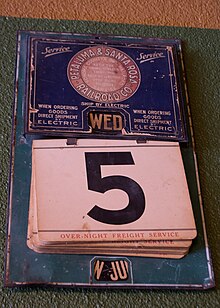
It was exceptional when we did it on the first day of January of the new year. Off the wall came the one calendar, and up onto the wall went another. Something we all do, but for an elderly parent who has dementia and isn't sure what day of the week it is, marking a new year carries heft.
My preference is to do the calendar each Sunday. It's the lightest day of the week, and prepares her for the coming week. She finds her pen and marks a big X on the day that just passed.
It's always interesting to see what she's willing to do if we do the calendar at, say, 9pm and there are only three hours left to that day. She is not willing to X that day.
"I'll just leave it."
I see that as a good sign. There is still time in that day, time to be lived. "Okay, Mom. That's fine." In fact, that's great.
"I'll just leave it."
I see that as a good sign. There is still time in that day, time to be lived. "Okay, Mom. That's fine." In fact, that's great.
The ritual usually begins with "What day is today?" and I'm not willing to tell her. I want her to figure it out.
"Well, Mom, yesterday was your doctor appointment. What day of the week is your doctor's appointment?" I want her to think this through. I want her little nerve endings to fire away and connect. I'll supply the safety net when the memory fails, which it is inclined to do.
"Well, Mom, yesterday was your doctor appointment. What day of the week is your doctor's appointment?" I want her to think this through. I want her little nerve endings to fire away and connect. I'll supply the safety net when the memory fails, which it is inclined to do.
"What day is today?" It could be overwhelming. More than 1, less than 30. Last night when we did the calendar, I suggested she try to find my birthday. She found it, and was surprised when I told her that my birthday was two weeks ago. She X'ed the days and there were a good number of X'es but she ripped right through them and landed properly on Sunday the 25th.
Last night she also wrote down her 2:45 hair salon appointment for today. While I doubted she'd remember when "tomorrow" came, it was important for her to do, for many more important reasons.
Last night she also wrote down her 2:45 hair salon appointment for today. While I doubted she'd remember when "tomorrow" came, it was important for her to do, for many more important reasons.
All the more interesting is this process, because we do it by telephone: I'm 300 miles away.
I summon Motherto mark this day from others.Behold! We're still here!
This is the blessing!
Tuesday, December 22, 2015
Aromatherapy for Seniors, Alzheimer's Patients (and Others)

"There is no cure for Alzheimer's" I read again and again. I've alternated between accepting that claim and refusing to accept it. Scientists promise a cure in the future, but what about now? Even if there is no cure currently, maybe it's possible to stop its progression. This - stopping the progression of Alzheimer's - is in itself a blessing and this is my goal for my elderly mom.
I think I get a wisp of a sense of how difficult it is to remove plaque when I think about my semi-annual teeth cleanings! Ouch! It is so much easier to not allow the plaque to build up in the first place. Or when I think about my own high cholesterol numbers, which is why I've been on Lipitor for so many years. As I just discussed with my doctor, the plaque in the arteries cannot be removed, but it can be stabilized. Or its buildup can be contained by smart eating. Such would be the plaque in the brain of Alzheimer's sufferers.
When it comes to my elderly mother, my mission is to halt its progression, and to stop this dreaded disease from further debilitating my mom's mind and robbing her of her intellect and memory. When Aricept had to be discontinued due to gastrointestinal side effects, I discovered that the Exelon patch bypassed that issue, as it was transdermal, and she's been on the Exelon patch ever since with minimal side effects.
My most recent protocol is aromatherapy. AROMATHERAPY? I do yoga and all, but I have my limits in this wellness craze.
Still, need mandated that I venture forth once again into cyberspace, at which time I found a study done by faculty at the Tottori University, Yonago, Japan, which used the essential oil rosemary. Rosmarinus officinalis. The same rosemary that we use for cooking to make food smell yummy? The same herb that I have growing in my garden? The study also used the essential oil of lemon. In this study, the two essential oils, rosemary and lemon, were added to water in a diffuser. Both are presumed to have properties that, by traveling through the nasal cavity, and thus avoiding being broken down in the liver, directly affect the hippocampus or amygdaloid body, which is in charge of discharging neurotransmitters. A compound in rosemary, 1,8-cineole, causes an increase in a neurotransmitter called acetylcholine. It is the breakdown of these neurotransmitters which causes the lapses in memory and cognition.

If there's any water left over, in the evenings she holds the diffuser close to her nose and just breathes in the vapors. She loves the sweet smell. And as a bonus it may actually be helping to WHAT the neurotransmitters.
Is it affecting, or improving her cognitive functioning and her memory?
I believe so. I maintain a log of what she does, what she says, and have been keeping this for months now. We also have a week-at-a-glance book that her aids and she fill in daily. In the last 5 weeks I've seen extraordinary improvement. In addition to the Exelon patch (which, by the way, is designed to block the enzymes that break down the neurotransmitters), she is also taking the doses of coconut oil (see next blog post.)
Doubtful? Read the Japanese study for yourself by following the link above. If your parent or spouse is suffering from Alzheimer's, what do you have to lose? What does he or she?
As for the rosemary growing in our garden, I have snipped off some branches and every now and then take a deep whiff. A big inhale... AHHHHH! And while inhaling I think about how much my brain loves this.....
And this is over-the-counter! The same type of naturally-growing plant that pharmaceuticals often try to mimic in their medications.
With this nasty disease, Alzheimer's, which usually results in death, it's best to take an all-inclusive approach. And remember, it takes 20 years for the symptoms of Alzheimer's to appear. So why wait until it's too late? Do some aromatherapy with the sweet-smelling scents of rosemary and lemon.
(See also: BBC: What Does Rosemary Do To Your Brain?)
What did I have to lose? What does my mom have to lose by trying this?
I ordered a diffuser and ordered the essential oils, and we went to work. The morning aid comes in to give my mom her meds and follows the protocol indicated in the study, exactly. She puts just enough water in the diffuser that the oils diffuse in under two hours, while my mom goes back to sleep. She sleeps as close to the diffuser as possible because she loves smelling the sweetness. Pretty interesting from somebody who insisted she had no sense of smell. Is there something in this essential oil is igniting her sense of smell?

If there's any water left over, in the evenings she holds the diffuser close to her nose and just breathes in the vapors. She loves the sweet smell. And as a bonus it may actually be helping to WHAT the neurotransmitters.
Is it affecting, or improving her cognitive functioning and her memory?
I believe so. I maintain a log of what she does, what she says, and have been keeping this for months now. We also have a week-at-a-glance book that her aids and she fill in daily. In the last 5 weeks I've seen extraordinary improvement. In addition to the Exelon patch (which, by the way, is designed to block the enzymes that break down the neurotransmitters), she is also taking the doses of coconut oil (see next blog post.)
Doubtful? Read the Japanese study for yourself by following the link above. If your parent or spouse is suffering from Alzheimer's, what do you have to lose? What does he or she?
As for the rosemary growing in our garden, I have snipped off some branches and every now and then take a deep whiff. A big inhale... AHHHHH! And while inhaling I think about how much my brain loves this.....
And this is over-the-counter! The same type of naturally-growing plant that pharmaceuticals often try to mimic in their medications.
With this nasty disease, Alzheimer's, which usually results in death, it's best to take an all-inclusive approach. And remember, it takes 20 years for the symptoms of Alzheimer's to appear. So why wait until it's too late? Do some aromatherapy with the sweet-smelling scents of rosemary and lemon.
(See also: BBC: What Does Rosemary Do To Your Brain?)
Thursday, June 18, 2015
The Burden Interview: Of Mothers, Caregivers, Sons and Daughters

"You're better at it," wrote my brother in an email after I complained that he wasn't doing anything for our elderly mom while I was doing everything.
His words still sting like a bumble bee.
His words still sting like a bumble bee.
Was that really supposed to appease me, or my primary care physician who was becoming extremely concerned as my blood pressure was rising higher and higher and higher and I was becoming pre-diabetic from lack of physical exercise? Or was it supposed to provoke?
Add to that the layer that he, my brother, lived only 20 minutes away from our mother, while I lived 300 miles away.
A Boston-based 2012 study indicated that daughters, twice as often as sons, become the elderly mother's caretakers. But still, sons comprise up to 30% of those care giving for elderly parents. In Canada up to 30% of those caring for elderly parents are sons, shows a Canadian study. The "elderly parents" are usually mothers, since women generally outlive men.
While the men in the Canadian study indicated positives as well as negatives in caretaking, they still assumed that responsibility. Married men generally had the support of their wives, with whom they discussed decisions they were making.
So how does it get to be the daughter living six hours away becomes the primary caretaker when the son, living 20-25 minutes away, does virtually nothing? And what repercussions does this have on my, the caretaker by default, health, finances, social life and emotional well-being?
After another email months later to my brother in which I outlined everything I'd been doing vis a vis my mom and the toll it was taking on me, his response was "Thanks."
Mine back was was "I don't want your thanks. I want your help."
Mine back was was "I don't want your thanks. I want your help."
While I could never anticipate my mother's declining cognitive, and physical, condition, I also could never anticipate that I would get absolutely no help or support from my "bro" or support from my sister-in-law, receiving instead just the meek justification for why it was that he was totally defaulting on the small things, including asking for information about her current health, and the very large and major things and decisions.
The word "burden" is used repeatedly in all studies about adult children as caretakers of elderly and frail parents. And it completely amazed me that there is something actually called "The Burden Interview," which I discovered on an online search.
This discovery was a true relief, and I gladly read the questions and circled my answer, recognizing so many aspects of what the questions addressed. Twenty of the 22 questions on the Zarit Burden Interview begin "Do you feel....." or "Do you feel that..." One question begins "Are you afraid about..." and the last and 22nd question begins, "Overall, how burdened to you feel..." Answers ranged from Never (score of zero) to Nearly Always (score 5). I wish that the question "Do you feel that your health has suffered because of your involvement with your relative?" should score a 5 and that my doctor's feelings about this should add in a bonus 5 points. Feelings are big in this test.
Test takers have 30 minutes for this test. Mine took much less, let's not say how much less. Then I added up my score. Yup! "Moderate to Severe Burden."
This discovery was a true relief, and I gladly read the questions and circled my answer, recognizing so many aspects of what the questions addressed. Twenty of the 22 questions on the Zarit Burden Interview begin "Do you feel....." or "Do you feel that..." One question begins "Are you afraid about..." and the last and 22nd question begins, "Overall, how burdened to you feel..." Answers ranged from Never (score of zero) to Nearly Always (score 5). I wish that the question "Do you feel that your health has suffered because of your involvement with your relative?" should score a 5 and that my doctor's feelings about this should add in a bonus 5 points. Feelings are big in this test.
Test takers have 30 minutes for this test. Mine took much less, let's not say how much less. Then I added up my score. Yup! "Moderate to Severe Burden."
The one question that I'd like to see the questionnaire ask is: "Do you feel angry at other family members who are doing less than you are?" or "Do you feel that other family members should be doing a better job at caring for your relative?"
I do, and I do. I wish the Burden Interview asked these questions because the complete lack of participation in my mother's caregiving by the person geographically closest to her adds a lot of stress too.
I do, and I do. I wish the Burden Interview asked these questions because the complete lack of participation in my mother's caregiving by the person geographically closest to her adds a lot of stress too.
When one family member is clearly dis-involved, and wants to dis-involved, there is no communication that is going to get you the understanding, and the help, that you want. There is no way to go but to accept that and let go. To do otherwise would be to increase ones emotional stress, and therefore burden and the consequences of that.
"Anger deprives the sage of his wisdom, a prophet of his vision," says the Talmud. More conversations, more attempts to get somebody to see your distress or point of view would end in just more frustration, and disappointment, and a self-destructive cycle of anger.
CARETAKERS of ELDERLY PARENTS: How many others like me are there out there? I would guess I'm not the only one.
 understanding, and the help, that you want. There is no way to go but to accept that and let go. To do otherwise would be to increase ones emotional stress, and therefore burden and the consequences of that.
 "Anger deprives the sage of his wisdom, a prophet of his vision," says the Talmud. More conversations, more attempts to get somebody to see your distress or point of view would end in just more frustration, and disappointment, and a self-destructive cycle of anger.
CARETAKERS of ELDERLY PARENTS: How many others like me are there out there? I would guess I'm not the only one.
It's often repeated how commonly families break up over money, especially after the death of a parent and the distribution of the estate.
Or, in this case, they functionally and emotionally break up long before. And when that's the case, don't hang on and let it raise your BURDEN SCORE even more!!
Sunday, May 10, 2015
There's Always Edible Arrangements for Mother's Day
I don't feel like sending flowers. I don't feel like it, and anyway, flowers just die.
 Two weeks ago I arranged the Peapod order to include fresh pineapple single serving cups. My mom has never tried those and it was worth a go. Perfect serving sizes for seniors, easy to open and to dispose of (including to recycle). She loved them. So much so that one week later when I asked her to have one, there were none left. I had the aid look, thinking they had to be somewhere, then the other aid. "She ate the last one."
I guess the pineapple single serving cups were a success. Healthy food, healthy living.
So then what? Peapod has a $60. minimum order. With the $10 delivery charge, that's $70. A lot for just pineapple single serving cups.
So instead of flowers, I ordered her the Edible Arrangements.She'll get her fruit and flowers all in one.
And they come in a handy practical container that can be used anywhere for anything - much better than a glass vase that can break and be dangerous.
And if none of my relatives WHO LIVES LOCALLY, i.e. if none of her other two children show up to to the decent thing, at least she has a beautiful bouquet of edible fruit, that will last her well through the week.
The delivery guy showed up at 10:30 this morning, very early, very nice, for Mother's Day. Beautiful.
 Two weeks ago I arranged the Peapod order to include fresh pineapple single serving cups. My mom has never tried those and it was worth a go. Perfect serving sizes for seniors, easy to open and to dispose of (including to recycle). She loved them. So much so that one week later when I asked her to have one, there were none left. I had the aid look, thinking they had to be somewhere, then the other aid. "She ate the last one."
I guess the pineapple single serving cups were a success. Healthy food, healthy living.
So then what? Peapod has a $60. minimum order. With the $10 delivery charge, that's $70. A lot for just pineapple single serving cups.
So instead of flowers, I ordered her the Edible Arrangements.She'll get her fruit and flowers all in one.
And they come in a handy practical container that can be used anywhere for anything - much better than a glass vase that can break and be dangerous.
And if none of my relatives WHO LIVES LOCALLY, i.e. if none of her other two children show up to to the decent thing, at least she has a beautiful bouquet of edible fruit, that will last her well through the week.
The delivery guy showed up at 10:30 this morning, very early, very nice, for Mother's Day. Beautiful.
Subscribe to:
Posts (Atom)